Piers for SD61 trustee

Greater Victoria School Board ยท October 17, 2026

Piers for School Board

Students first. Steady leadership. Decisions grounded in evidence.

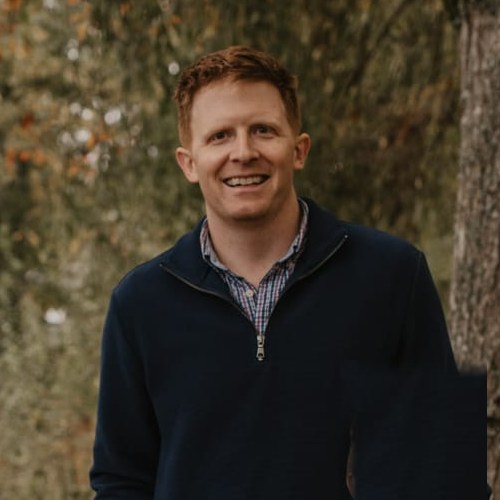
I'm Piers, a parent in Victoria and a candidate for the Greater Victoria School Board. Our district has spent too many years in the headlines for the wrong reasons. I'm running because our kids need a board that does the unglamorous work well: keeps its attention on how students are actually doing, takes technology seriously, governs steadily, and spends public money like it matters. Four commitments, laid out below.

01

Focus on Student Outcomes

We may be looking at the first generation in a century that performs academically worse than the one before it. That has to be turned around, and turning it around means putting student achievement first.

Not wedge issues. Not broader political ambitions. Just a relentless focus on whether our kids are learning to read, write, reason, and do math, and on closing the gaps for the students who are falling behind.

02

Technology: Phones Out, Fundamentals First

I have spent my career building software. I understand technology's potential, and I understand its dangers, because I have watched both up close. I believe mobile devices bear a large share of the blame for what has happened to children over the past fifteen years. The evidence is no longer subtle. The U.S. Surgeon General's 2023 advisory found adolescents spending more than three hours a day on social media face double the risk of depression and anxiety symptoms. The OECD's PISA 2022 results show 65% of students are distracted by digital devices in math class, and those distracted in most lessons score about three-quarters of a year of learning behind their peers. UNESCO's 2023 Global Education Monitoring Report found it can take students up to twenty minutes to refocus after a single notification, and recommended that phones be kept out of schools.

British Columbia required every district to restrict phones starting in 2024, and SD61's current policy asks students to keep devices out of sight but leaves classroom use to teacher discretion. That is a start. I want to go further and make our schools entirely phone-free from the first bell to the last. And because the problem doesn't start at the school door, I want the district to help start a community covenant, in the spirit of Unplugged Canada and Wait Until 8th, where families in each school agree together to delay the age at which their children get a smartphone. No parent should have to be the only one saying no.

Artificial intelligence is a different matter, and I want to be clear about where I stand. I believe AI will be the most consequential technology of our lives, and I am genuinely optimistic about the good it will do in the world and its power as a tool for learning. But a tool for learning is only useful to someone who can tell when it is wrong. UNESCO's guidance on generative AI in education recommends a minimum age of 13 for classroom use. An MIT Media Lab study found that people who leaned on ChatGPT to write essays showed weaker neural engagement and poorer recall than those who wrote unaided, and the gap persisted over months. Children need the fundamentals first: reading, writing, arithmetic, and the habit of checking their own work. I want AI tools in the hands of our educators now, to lighten their administrative load, and I want an extremely cautious, evidence-led approach to putting them in front of students, reserved for the latest grades.

03

Stable Governance

SD61 has been marred by conflict going back two school boards. It is time to prioritize stability, maturity, and sensibility in leadership.

You can't move a district forward while you're fighting with each other, with district staff, with the municipal government, and with the provincial government. A board that governs calmly and works constructively with its partners is a precondition for every other goal on this page.

04

Data-Driven Decisions and Financial Prudence

Good intentions are not a strategy. The board should set clear goals, measure progress against them, and change course when the evidence says a program isn't working.

The same discipline applies to money. Every dollar spent on overhead or on a program without results is a dollar not spent in a classroom. I will treat the district's budget as what it is: public money entrusted to us on behalf of students.

Let's get this right.

School board races are decided by a few thousand votes and by neighbours talking to neighbours. I'm not asking for your money. I'm asking for your voice.